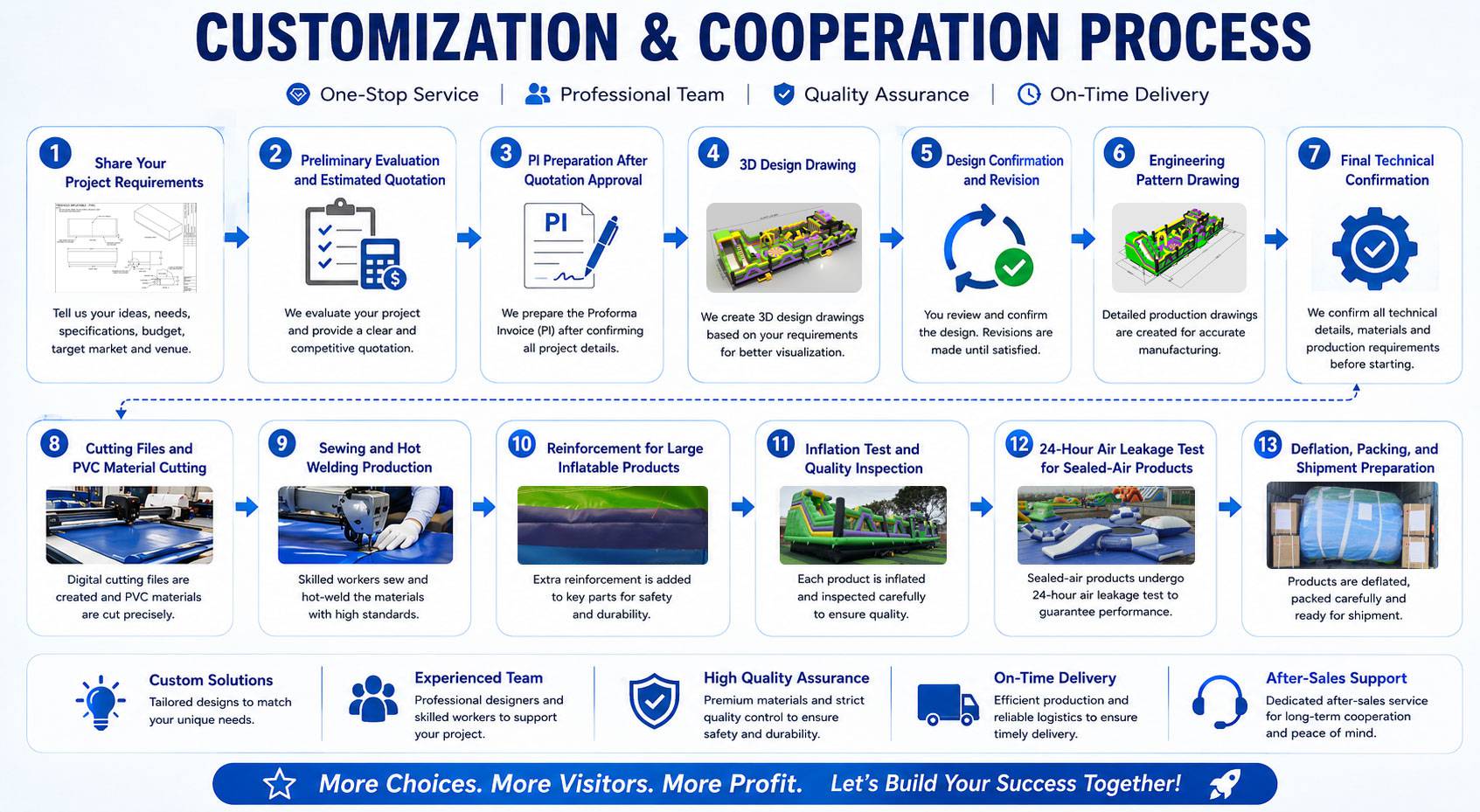
From Quotation to Finished Inflatable Park: How MinyeFun Manages a Professional Custom Inflatable Project
When a customer plans a custom inflatable park, trampoline park inflatable section, obstacle course, giant slide, or themed inflatable attraction, the project should not start with a random design. It should start with a clear commercial plan: site size, target users, theme, game functions, budget, and expected operation model.
At MinyeFun, we understand that a custom inflatable is not simply a colorful product. For amusement parks, indoor playgrounds, trampoline parks, family entertainment centers, shopping malls, resorts, and rental companies, it is a business investment. A successful project requires professional quotation, clear order confirmation, detailed 3D design, engineering support, controlled production, reinforcement, and final inspection.
Because custom 3D design requires significant designer time, MinyeFun follows a practical and professional order process. We first evaluate the customer requirements and provide an estimated quotation. If the customer accepts the quotation, we prepare the PI. After the customer pays the deposit, our designer starts the 3D design and revises it until the customer is satisfied. For customers who want to see a design before paying the deposit, we normally charge a USD 200 design fee, which will be counted as part of the order payment after the order is confirmed.
1. Share Your Project Requirements
Every custom inflatable project starts with customer requirements. Customers can send us the product idea, available site size, target age group, theme style, color preference, game functions, logo requirements, budget range, indoor or outdoor usage, and special operating needs. For large inflatable parks or trampoline park integration projects, venue size and traffic flow are very important. The more complete the information is, the more accurate the quotation and solution will be.
2. Preliminary Evaluation and Estimated Quotation
After receiving the project information, MinyeFun makes a preliminary evaluation and provides an estimated quotation. The quotation is based on product size, design complexity, material usage, sewing or hot welding requirements, blower configuration, accessories, logo artwork, and custom details. This step helps the customer understand the expected investment before moving into detailed design.
3. PI Preparation After Quotation Approval
If the customer accepts the estimated quotation, MinyeFun prepares the Proforma Invoice (PI). The PI confirms the basic order scope, price, payment terms, and main product information. This makes the project clearer and protects both sides before formal order production begins.
4. Deposit Payment and Order Confirmation
After the PI is confirmed, the customer pays the deposit to officially confirm the order. Once the deposit is received, the project enters the detailed 3D design stage. This is the standard process because professional custom design requires real designer working hours, and the order deposit confirms that the customer is serious about moving forward.
5. Optional Pre-Deposit Design Service: Design Fee
Some customers want to see a 3D design before paying the order deposit. We understand this need, especially for large projects. However, professional 3D design is time-consuming and requires our designer to study the site, functions, theme, layout, colors, and customer requirements. For this situation, MinyeFun normally charges a design fee. It will be counted as part of the order payment after order confirmation. This policy helps customers receive a real customized design while also respecting the professional time of our design team.
6. 3D Design Drawing
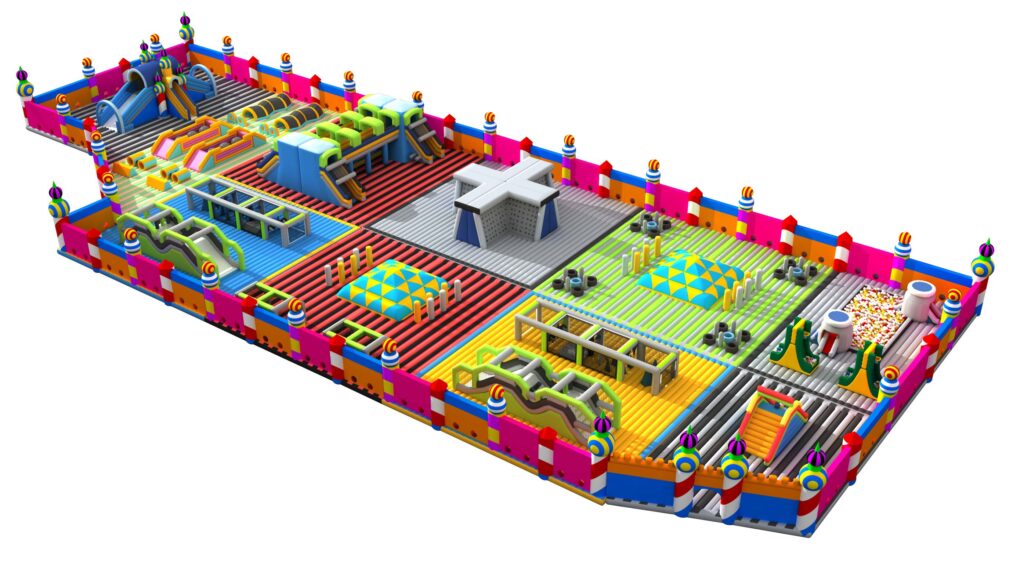
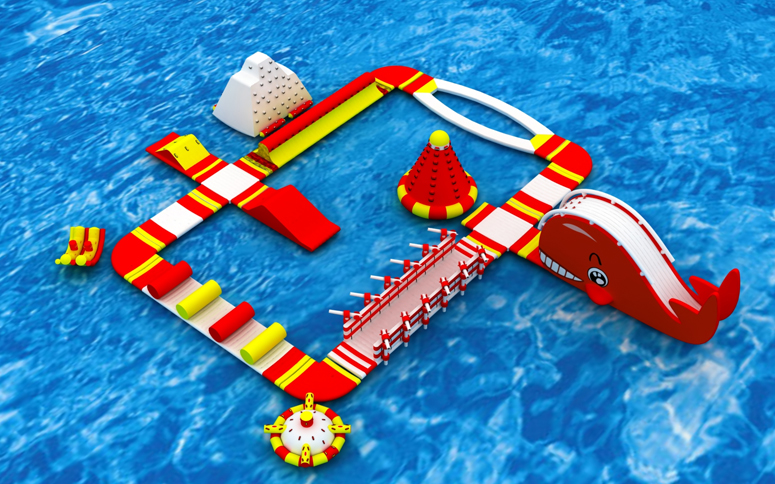
After the deposit is received, or after the pre-deposit design fee is paid, our designer starts creating the 3D design drawing. The design shows the product layout, game arrangement, theme style, colors, logo positions, entrance and exit, and overall appearance. For business owners, the 3D design helps them clearly see how the inflatable will look in operation.
7. Design Confirmation and Revision
After the first 3D drawing is completed, we send it to the customer for review. The customer can request changes such as color adjustment, game layout changes, logo position changes, entrance and exit modification, or theme improvement. MinyeFun revises the design until the customer is satisfied. This step helps avoid misunderstanding before production and makes the final product closer to the customer’s business needs.
8. Engineering Pattern Drawing
After the 3D design is approved, MinyeFun’s structural engineer prepares the engineering pattern drawing. This technical drawing confirms product structure, actual dimensions, game layout, blower quantity and positions, air pressure design, logo positions, entrances, exits, connection methods, and load-bearing areas. A 3D design shows what the product looks like, but the engineering drawing confirms how it can be produced and used safely.
9. Final Technical Confirmation
Before cutting files are prepared, we check the technical details again. This includes final size, structure, game functions, blower configuration, logo positions, material application, safety layout, and reinforcement areas. This step is important because it helps prevent production mistakes before the PVC material is cut.
10. Cutting Files and PVC Material Cutting
After the engineering pattern drawing is confirmed, our engineer prepares the cutting files. Then the PVC tarpaulin is cut by computer-controlled cutting machines. Accurate cutting helps ensure proper size, stable shape, smooth assembly, and better finished product quality.
11. Sewing and Hot Welding Production
After cutting, the PVC pieces enter the production stage. Depending on product type and structure, MinyeFun uses sewing, high-temperature hot welding, or a combination of both. Constant-air inflatable products commonly use sewing for the main structure. Sealed-air products usually use hot welding for airtight parts.
12. Reinforcement for Large Inflatable Products
For large inflatable products, MinyeFun adds reinforcement before inflation inspection. We normally add 0.6 mm PVC tarpaulin over stitching lines at key load-bearing and high-stress areas. This helps strengthen the structure, improve durability, reduce seam pressure, and support long-term commercial use.
13. Inflation Test and Quality Inspection
After production and reinforcement are completed, the inflatable is fully inflated for inspection. We check the overall shape, air pressure, seams, reinforced areas, hot welding areas, accessories, logos, game functions, blower positions, entrances, exits, and key safety details. This allows us to see the real finished product before packing.
14. 24-Hour Air Leakage Test for Sealed-Air Products
For sealed-air inflatable products, after inflation, the product remains inflated for 24 hours. Only when there is no air leakage, deformation, obvious pressure loss, or other quality issue will the product be deflated and packed.
15. Deflation, Packing, and Shipment Preparation
After inspection is completed and the product is confirmed to be qualified, the inflatable is deflated, folded, packed with accessories, and prepared for shipment. Accessories such as blowers, repair kits, storage bags, and other required parts are packed according to the order details.
Why Choose MinyeFun for Custom Commercial Inflatables?
- Experienced custom inflatable manufacturer since 2008
- Custom design based on site size, theme, budget, and operation needs
- Professional design team and structural engineering support
- Commercial-grade PVC tarpaulin and suitable production process
- Sewing and high-temperature hot welding capability
- Reinforcement with 0.6 mm PVC for large inflatable load-bearing areas
- Full inflation inspection before packing
- 24-hour air leakage test for sealed-air inflatable products
- Global export experience for amusement parks, trampoline parks, FECs, malls, events, resorts, and rental businesses
Conclusion
A successful custom inflatable project is built through a complete process, not through a simple picture. From requirements, quotation, PI, deposit, 3D design, engineering, cutting, production, reinforcement, inspection, and packing, every step affects the final product quality and commercial value. If you are planning a custom inflatable project, contact MinyeFun and share your site size, idea, budget, theme, and target users. Our team will help you create a practical and attractive commercial inflatable solution.